In a time where many homes are mass-produced and designed for profit rather than people, it’s easy to forget that our environment has a profound impact on how we feel, think, and live. Thoughtful design choices can support your health, your routines, and your long-term wellbeing — far beyond what conventional homes typically offer.
More than ever, wellbeing in home design isn’t a luxury – it’s a necessity. From the placement of windows to the materials in your walls, every decision matters. In this post, we explore how homes can be designed to actively care for both people and planet and how we at Happynest Homes use these principles to craft architectural, sustainable, and wellness-focused mobile homes.
Why Design Impacts Our Health
It’s not just about aesthetics. According to a 2023 study by the UK Green Building Council, 90% of our time is spent indoors – and the design of those spaces plays a huge role in our physical and mental wellbeing. Poor ventilation, harsh artificial lighting, synthetic materials, and poor space planning are all surprisingly common in standard housing, and they affect how we feel every single day.
1. Natural Light — More Than Just Bright Rooms
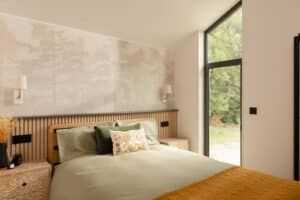
Maximising natural light is a cornerstone of healthy home design. Homes should be thoughtfully oriented and designed to let in abundant daylight. Window placement matters: by ensuring a balance of direct and diffuse light throughout the day, homes can support your circadian rhythm and boost mood.
2. Top-Class Ventilation Systems
Fresh air is essential. The gold standard is a fully integrated Mechanical Ventilation with Heat Recovery (MVHR) system, typically reserved for high-performance eco-homes.
These systems ensure a continuous supply of fresh, filtered air, help regulate humidity, prevent condensation and mould, and crucially recover heat from outgoing air to warm the incoming air – reducing energy use dramatically.
Many standard homes make do with extractor fans or trickle vents, which can be noisy, inefficient, and ineffective – especially in colder months.
3. Biophilic Design: Shapes That Help the Mind Wander
Biophilic design isn’t just about adding plants. It’s a philosophy that fosters a deep connection to nature through organic shapes, natural textures, and visual variety.
While many traditional builds follow square, repetitive structures, biophilic design embraces curves, asymmetry, and visual rhythm – patterns that mirror the natural world and encourage a sense of calm, creativity, and curiosity.
Studies from Terrapin Bright Green show that biophilic design reduces stress, improves cognitive function, and enhances mood, making it a powerful (and often overlooked) tool in home architecture.
4. Flexible, Flowing Spaces
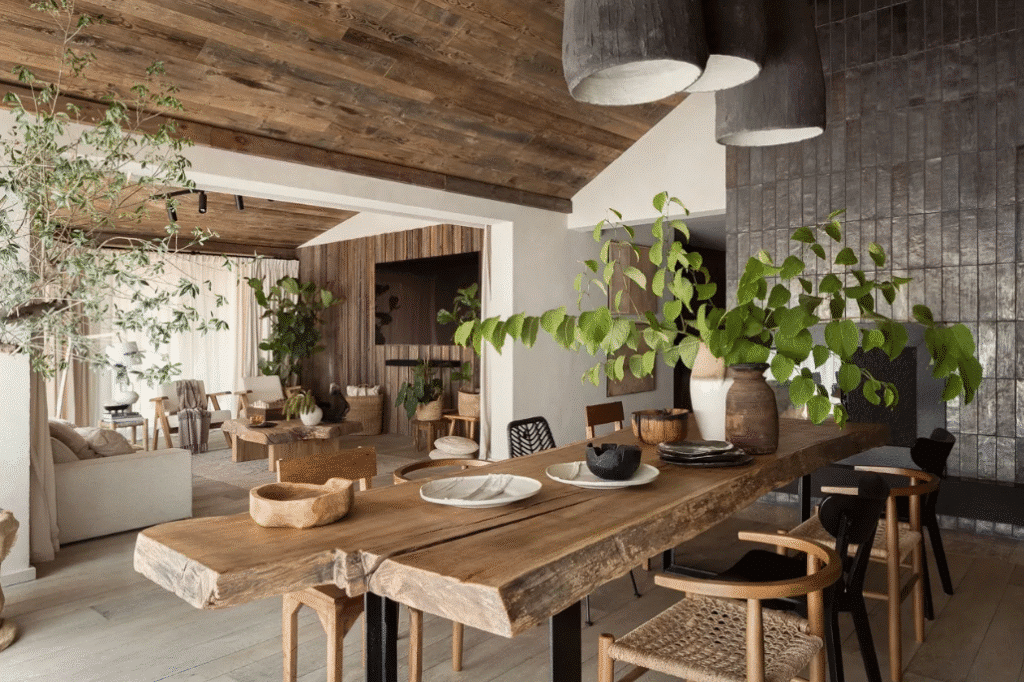
Modern living doesn’t fit into rigid boxes. Homes designed for wellbeing offer open-plan layouts and flexible zones that evolve with your needs – whether that’s a workspace, play area, retreat, or creative studio.
Flowing, connected spaces allow light and energy to move freely, creating a more uplifting environment. In contrast, many conventional homes still favour segmented rooms that can feel dark, closed off, and underused.
5. Sustainable, Health-Focused Materials
What’s in your walls matters. Health-focused homes avoid the toxins and pollutants commonly found in mass housing. Look for:
- Natural wall cladding, approved for asthma and allergy sufferers
- No MDF or chipboard, meaning no formaldehyde off-gassing
- Aluminium-framed windows – recyclable and durable
- Engineered wood flooring with low-VOC finishes
- Minimal plastic used in structure or detailing
These materials don’t just last longer, they also contribute to a healthier indoor air quality and lower environmental footprint.
6. Colour Psychology & Natural Wallpapers
Colour impacts how we feel. Healthy homes lean on grounded, calming palettes that promote rest, creativity, or focus. Natural wallpapers printed with non-toxic, low-VOC inks on sustainable materials bring warmth and texture without compromising air quality.
In contrast, many standard homes use synthetic finishes, vinyl wallpapers, or gloss paints that can emit harmful compounds and create sterile-feeling environments.
A Better Way to Live
Unfortunately, standard homes often fall short:
- Poor insulation and single-aspect lighting
- Outdated ventilation solutions
- Off-gassing from MDF and laminates
- Overuse of plastic and low-grade materials
- Rigid, segmented layouts that hinder wellbeing
At Happynest Homes, we bring these health-first design principles to life in a new format by creating architecturally designed mobile homes that are built on a chassis but engineered beyond traditional standards.
Our homes feature fully integrated MVHR systems, natural materials, and beautifully designed spaces that flow and breathe. Every Happynest Home is a carefully crafted response to the way people want to live. Sustainably, healthily, and inspired by nature.
Whether you’re looking for a mobile home, a garden annexe, or an alternative eco-living solution, we invite you to explore our range of beautiful homes.